A Statement in Silicon: The Geopolitics of Isambard-AI

The United Kingdom has officially fired its shot in the global AI arms race. The activation of the Isambard-AI supercomputer is not merely another government-funded project; it’s a profound statement of national ambition. As old industrial powers fade, influence is now measured in computational capacity. Beyond the political speeches, the real story is about achieving computational sovereignty. In an age where digital infrastructure is national power, the UK has placed a £225 million bet that it must compete at the highest level, moving beyond a dangerous reliance on foreign technology to forge its own strategic path.
Anatomy of a Behemoth
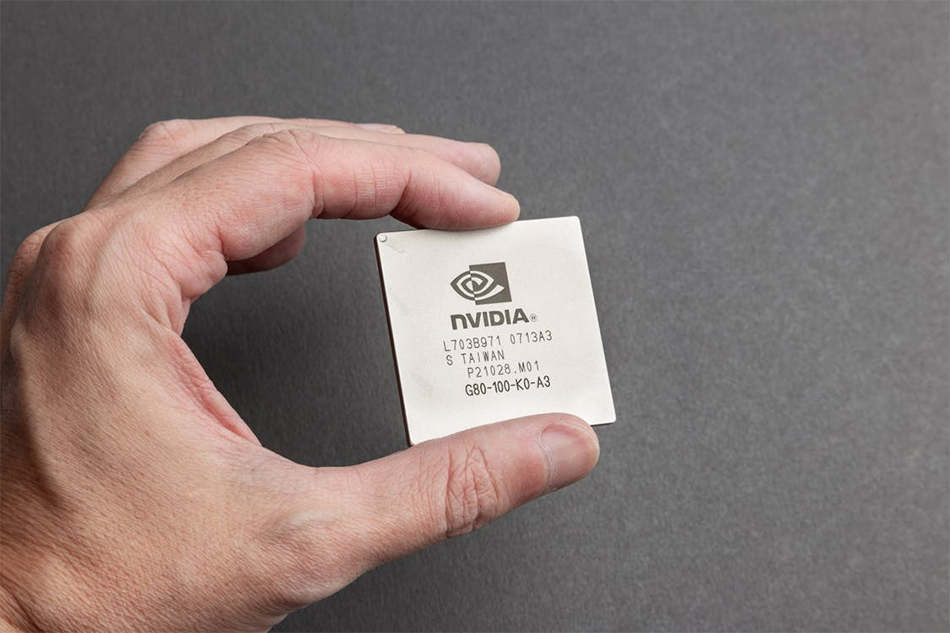
The machine’s brute force is staggering. Isambard-AI is powered by 5,448 of Nvidia’s GH200 Grace Hopper superchips, delivering 21 exaflops of AI performance. The significance of these specific chips cannot be overstated; they fuse the CPU and GPU onto a single superchip, eliminating the bottlenecks that plague traditional systems when handling the colossal datasets required by modern AI. This renders the machine ten times more powerful than the next fastest UK system and ranks it 11th globally. This isn’t just an upgrade; it’s a quantum leap that redefines the nation’s computational ceiling. It provides researchers a tool once the exclusive domain of global superpowers, enabling AI models of a scale previously unimaginable within Britain.
The Efficiency Mandate
Here lies a fascinating paradox. While Isambard-AI has colossal power, it is also a model of radical efficiency, ranking 4th on the Green500 list. This is not a footnote; it is a critical design philosophy. For too long, computational progress has ignored its crippling energy costs, leading to data centers that strain national power grids. That model is unsustainable. With a Power Usage Effectiveness (PUE) rating below 1.1 and a design that recycles waste heat, Isambard-AI proves immense power need not equate to immense waste. This isn’t about environmental altruism. It’s about cold pragmatism. Sustainable scaling is the next great hurdle for the entire AI industry, and this machine provides a necessary blueprint for the future.
The Sovereign Imperative

The inescapable conclusion is that the £225 million investment is a geopolitical maneuver. This collaboration between academia, government, and tech giants is a national strategy for securing a competitive edge in a world dominated by American and Chinese tech. The stated goals of drug discovery and climate modeling are the public justification for building what is essentially sovereign infrastructure. The development of BritLLM, a language model trained on the UK’s languages including Welsh, is the most telling detail. This is a direct challenge to the cultural homogenization of foreign AI, an attempt to ensure the UK’s digital future isn’t shaped by algorithmic biases born from Silicon Valley data sets.
Where Silicon Meets Society
Ultimately, a supercomputer’s value is in the problems it solves. Isambard-AI’s theoretical power is now being tested against the messy reality of human need. Its initial workload is intensely practical: the Nightingale AI project seeks to deliver earlier diagnoses from highly sensitive NHS data, while another model targets prostate cancer detection. Such work is only politically and ethically possible on a secure, sovereign system, away from the commercial interests of foreign corporations. This is where the machine must prove its worth—not in abstract benchmarks, but in hospitals and laboratories. These applications are the first, most crucial tests of this national asset.
Isambard-AI, then, is more than an impressive array of hardware. It is the physical manifestation of a national strategy, a high-stakes gamble on technological independence in a deeply competitive world. It represents the belief that a nation’s 21st-century relevance will be measured by its ability to own and direct its computational destiny. The switch has been flipped, and for better or worse, the true test has just begun.